Tuesday, June 15, 2010

Sixth Observation - Glen Eira College

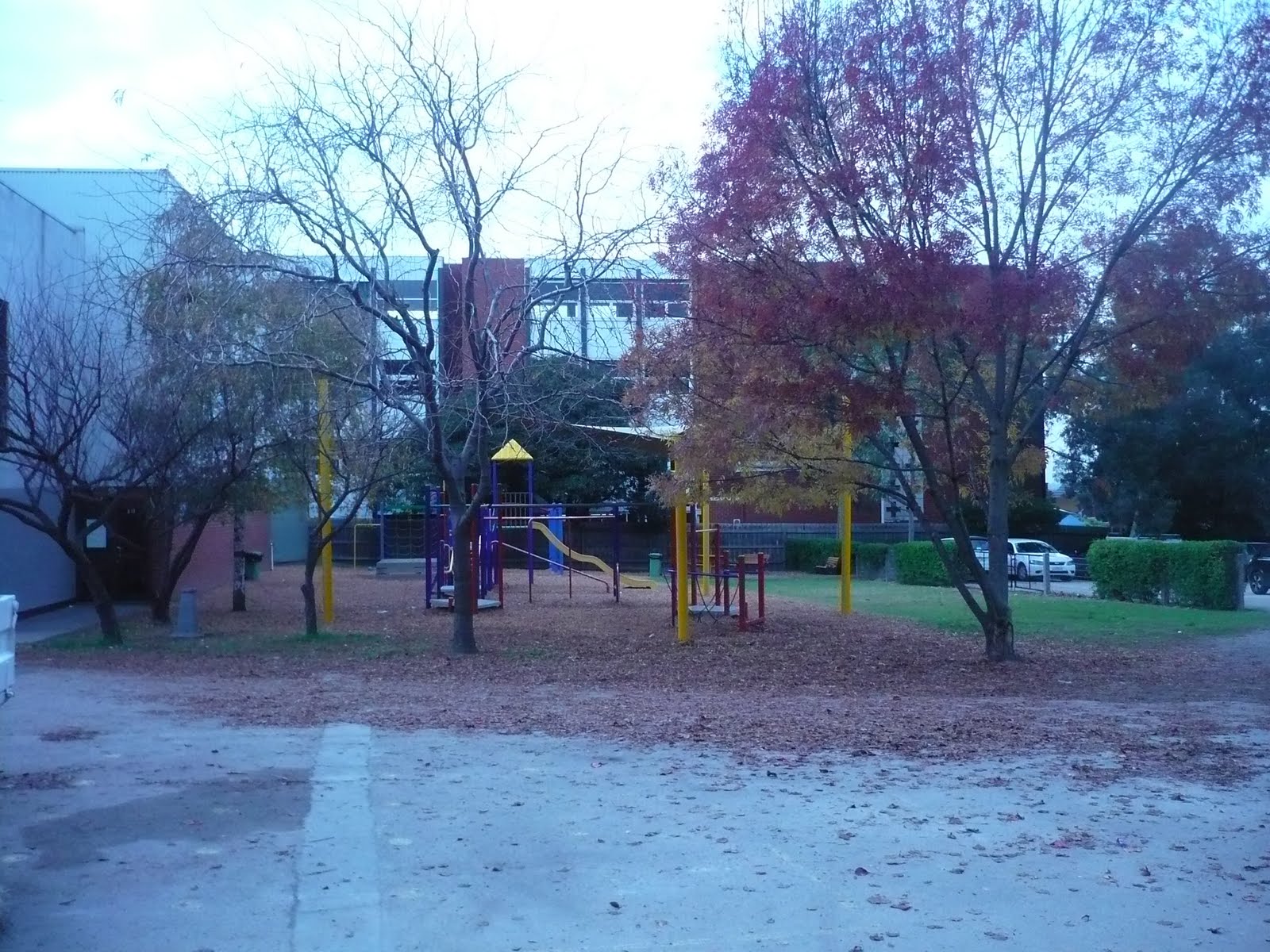
The sixth school that we visited was Glen Eira English Language Centre. Like Blackburn, this school does provide new immigrants the change to brush their English Language for 20 weeks and then sent to mainstream secondary schools. In contrast, the school provides students to have the experience of what a typical Australian school is before going to a mainstream school. Facilities such as a large playground was included and a chance to study at the school after the 20 weeks of ‘training’. In addition, the school does provide students that are overage to go to a TAFE course upon the 20 weeks completion. The school also provides international secondary school students from other languages to take the English course at the school.

In class, the students were set into small class sizes and studies of different subjects were taught in order to widen their knowledge of Australian contexts. The teachers told us that they have to prepare their own materials and implemented free teaching as long as they are up the Victorian Education Learning Standard (VELS). Teachers in the college would give students more time to think about on what they are doing rather than giving those tasks that could be a serious challenge. Code switching could be used depending on situations. The teacher told us that they do encounter some culture issues and gender issues. There are also at times that the boys and girls could simply not work together and things were not going to their plan but they had to face the fact, hoping that the situation could change when time carries on.

There is one thing that is interesting that is that students at the school do not need to have any exams to get into the desirable school. All they need to do is to work hard and hopefully, be accepted into their desirable school. There is also a rule that schools are not allowed to decline any student under 18, in which their area of location of residency is closest to the specific school.

To conclude, I have seen two classes during the time there. The first one was useful as there are some challenges faced by the teacher and how she prepared the materials for her students taking Social studies. The second class was more or less similar to the ones at Blackburn and I think it would have been better if they had shown some speciality/strongest courses for us to observe.

Monday, June 14, 2010

Fifth Observation - Blackburn English Language Centre

The fifth school is, by all means, acts as an intermediary to handle students before they go to their primary or secondary schools. It can be said that the school handles screening and helps students to brush/develop their English Language so that they could get to the mainstream schools and Australian education system. The students in the school undergo a 20-week program to understand the English system and then sent to schools by random distribution. The students do not have a specific class according to age but they are classified by their language skills.

I have observed two classes. The first one was a Computer lesson with English contexts. The teacher told the students to look at the website 'Behind the News' from the ABC website. It did take the students some time to finish the job and answer the questions. The lesson took almost one lesson (40 minutes) to finish the whole process (worksheet, watching, and reading). The teacher did give some useful information on casual English language and told the students to look out for casual English used in 'Behind the News'.

The second one was rather a straightforward class - Maths in the Secondary section. By coincidence, they were having a Maths test therefore; I do not have the opportunity to observe much from it.

I have to be frank to say that I did not enjoy this comparing to the previous observations, as there is nothing special from it. Other than using ‘Behind the News’ from the ABC, there is basically nothing else that I could take something away from it. All I can say that the teaching was pretty average despite them being very approachable as well as showing their enthusiasm in teaching new immigrants on English Language in all subjects. They do have a mission to cater students needs in order that they would reach the mainstream schools after the second term.

Wednesday, June 9, 2010

Fourth Observation - Macleod College 7/6/10


The school that we sent to is a fifteen-minute drive near to Macleod station. Macleod College is a school, which does provide education from early years up to the end of secondary. The college is not the best nor is the worst in reputation but the college widely respected in the vast range of co-curricular activities and learning English as a secondary language from Primary to Secondary.

I will discuss mostly on the secondary section. The surprising thing from the school is that the classroom is an open class and the school had implemented the ‘breaking down the walls’ system. They also have teachers who have to teach from Primary to Secondary. It is a very unusual issue as most teachers usually take students by either level-wise or from the subject they are specializing in. It seems to me that the teacher also used the widening of space so that students will feel comfortable when they are in class. I also felt that the spacing of the learning space is a good thing as well as something new because it is impossible to see something like this back home and indeed, the teachers could merge the class; say for example, three classes in the same level could merge into one if the teacher co-operate on one particular material. This does shows the flexibility of the classes both from the teachers and from the students.


The surprising thing is that I do like the visibility of the classroom because the school provide every class and every staff room as visible as possible so that students and staffs could develop at a higher level. Teachers desks are also widen so that students could stand around the teachers’ desk. There are some drawbacks. With the breaking of the walls, classroom will become much noisier and there will be many children that will be looking around in every direction. That could mean that students' concentration could be be focused in every class. There is a possibility that teachers do not like the method of how the school operates with the breaking of the walls system implemented. Teachers are mostly part-time rather than full-time as teachers are going on shifts on a certain number of days. In order to satisfy that, timetable on lessons have to be carefully planned and this might dampen the students development with the teacher teaching only a number of days and a reserve teacher taking over. That could show the inconsistency.

To conclude, I think the school is very ambitious in many things in order to break the barrier between teachers and students but I believe that the school is looking on the long term basis rather than a short term results.

The connection of two classes into one big classroom

The visible staffroom

Sunday, June 6, 2010

Third Observation - Sacre Coeur - 2/6/10


Sacre Coeur, which literally means 'Sacred heart' in French, has around 150 sister schools (feeder schools) in over 40 countries.
The school is an independent catholic school and it is a all-girls school. The school can be comparable to Melbourne Grammar School. Unlike other school observations, this school was a short one and everything had to be done quickly and smoothly.

With no time to waste, we were introduced by the principal of the school and showed us the details of the school. It seems that the girls could have fun and learn at the same time as the school had given them the balance of study and play. There were, in some cases, that girls could go out and have an exchange at one of the the possible 150 feeder schools. This, in fact, could broaden their horizons.

The next part was touring around the school and the school's campus was a mixture of old and new buildings. The old ones were well preserved and interestingly speaking, the school management told us that the school is co-operating with the school next to them so that both students could go to each others' school and study. Courses or lessons that could be taught by either one of the schools were just surprising because in Hong Kong, this kind of co-schooling would never happen in Hong Kong. I was very impressed by how the two schools could compromise and let both students go to the schools and learn.

The following event was the class observation time. I, along with Vivian Lee and Crystal Leung, went to a Maths class in Year 9 and was introduced by the teacher. I can say that I do not like Maths since coming back to Hong Kong but as the class proceeds, I was sitting down and listening to the teacher about dependent and independent variants and the 'x and y theory'. The teacher was explaining how to work out the x and the y and even students do not know what they were, the teacher showed some supportive (alternative) questions to ask them. I like it as this could make the students understand better. As an idiot who knows nothing about Maths, I tend to get what the teacher had said and did some questions as the teacher asks the students to try out. there was a question that I did 'challenge' the teacher on one equation but it was a good experience.


At the end, I enjoyed the lesson so much that I was very reluctant to go because I can say that that teacher had made me learn something and I can bring that thing back home. The reason I am saying that is in Hong Kong, teachers usually give the equations to students and then asks them to solve it by themselves. There were no or limited explanations given and students were usually puzzled by the questions given. When the students asks the teacher how to do that specific question, the teacher would usually respond that we do not know how to do it and we were too reliant to the teachers. the teachers there would usually give more time for students to understand the theory and then carry on whereas in Hong Kong, the teacher just rush the chapters regardless the students prior knowledge. I do really hope that teachers should give more time for students to understand rather than rushing the chapter in order to tick the boxes.


Monday, May 31, 2010

Second Observation - Melbourne Grammar School - 30/5/10


Located opposite to the Shrine of Remembrance,
the school is a private school for boys. The students population are mostly Europeans and there are Asians at the school, as a minority. The campus are also well protected by the antiques and preservation department. The school also have two prime ministers that graduated from the school. Other than that, the school have a powerful alumni which most people from there hold important and influential positions in the society.

The school is not like a school. This school is an elite school. In addition, it does not, however, look like a school but an university as it does have everything that a typical university have - theatre hall, rehearsal hall, footie + cricket + football pitches, etc. The students are very high-tech and indeed the school is very prestigious as the buildings are a mix of the old and the new.

We had two lesson observations: First half - German and Second half - Chinese. I will start off with the German class. It is a Year 11 class and there are only six students in the class. There is one teacher and one teaching assistant. When it is all settled, the teacher starts teaching. She hands out the syllabus to the students and the topic is about 'School systems in Germany'. The topic is very interesting but it does not imply to the students as they seemed not to be enjoying the class. The behaviour was under par and their response was not at their best. There was one incident that the teacher had to sent the student off (out of the classroom) to cool down. I have to say frankly that it is a boring class as the teacher is more teacher based and one-sided talking. The student only gave some feedback but when the teacher asks the student to elaborate more in detail, he was somehow reluctant to answer but he did fulfill the teachers requirements. The materials are very exam-oriented but that is explainable as the students are in their Year 11s. All in all, it is a very typical Aussie classroom from the government and that could be comparable to a typical Hong Kong classroom.The differences are that the class ratio is 6:2. and there are no fixed seats. The students are able to give feedbacks and question the teacher on the answers given on the sheet (despite the teacher stating to students that there will be a modal answer after the students had completed the activity). Hong Kong students are reserved in a way and it would be very difficult for them to answer in open ended questions as the Hong Kong system does not provide such questions and thus, limiting them in their development of creativity.

The second lesson was Chinese with Year 10. The teacher is not a Chinese teacher but an Australian teacher with excellent Chinese. He started off the lesson with a question and answer game which concise of three teams - Peking (Beijing) team, Hong Kong team and Taipei team. the three teams start with 20 points. Each student had to go up in front of the classroom and the teacher will ask the question. The quickest student who answered the question correctly will get 5 points. 5 points off for incorrect answers and the first team that reaches 40 points win a set. It was a pleasant class. The students enjoyed it and so did I. The students (some) were over the top and there were some points in which the student have to remember the answer from what they have learnt from the notes. I can say that the materials are dull in a way but the teacher had made the materials useful to the students. This could help students develop their Chinese vocabulary by memorizing and having fun in the class. There were at one point that some students do not understand the questions and the teacher will suit their needs by rephrasing the question or giving them another easier question. To conclude, I do enjoy the latter than the first one. It is not because I am good in that language (in fact, I am not good in Chinese), but because I find the class interesting and the way of teaching. In addition, I did learn some Chinese vocabularies for me to take home!

Two different classes, two different teaching styles. There are different classes in which you need to imply different strategies to make the class more effective. The school itself does show its uniqueness and their status as one of the top schools in Victoria. It does have a huge difference from the school from Springvale and here but I think with the mix and match from both schools and then imply them to Hong Kong context, I think it will work and students will enjoy an effective class, hopefully.